We are tapping on our phones every day hundreds of times.
Scrolling, Zooming, Typing, and Gaming
But do you paused and think how can a flat piece of glass know exactly where we have touched with our finger?
There is no buttons, no moving parts just a piece of glass.
All of our answers are in electric fields, tiny charges, and clever physics not in magic but it feels like magic.
Let’s take a look how these things make sense.
First About This Big Idea
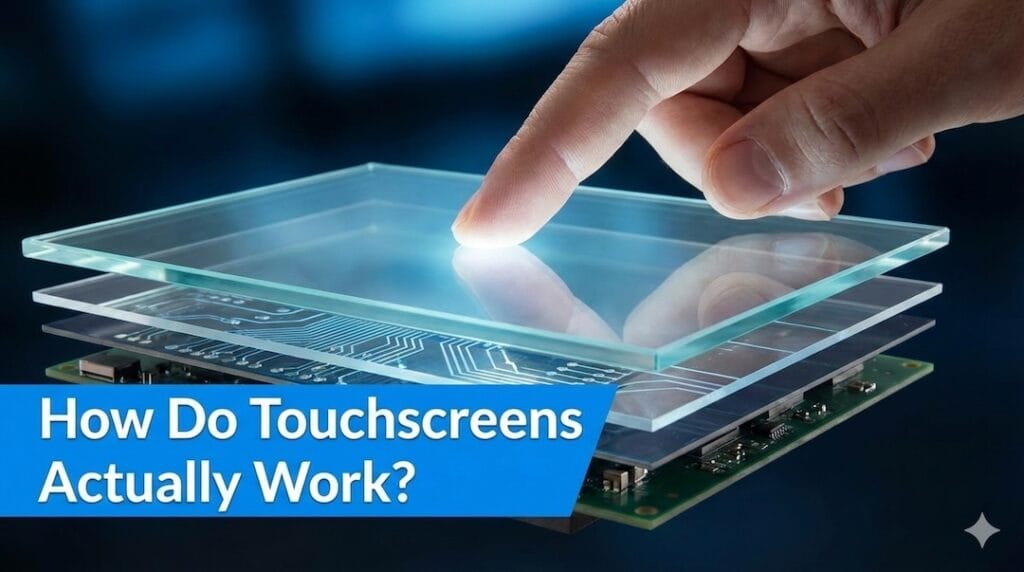
touchscreens never feel your finger.
It just detect changes in electricity.
Our finger is slightly conductive right but you don’t know that earlier.
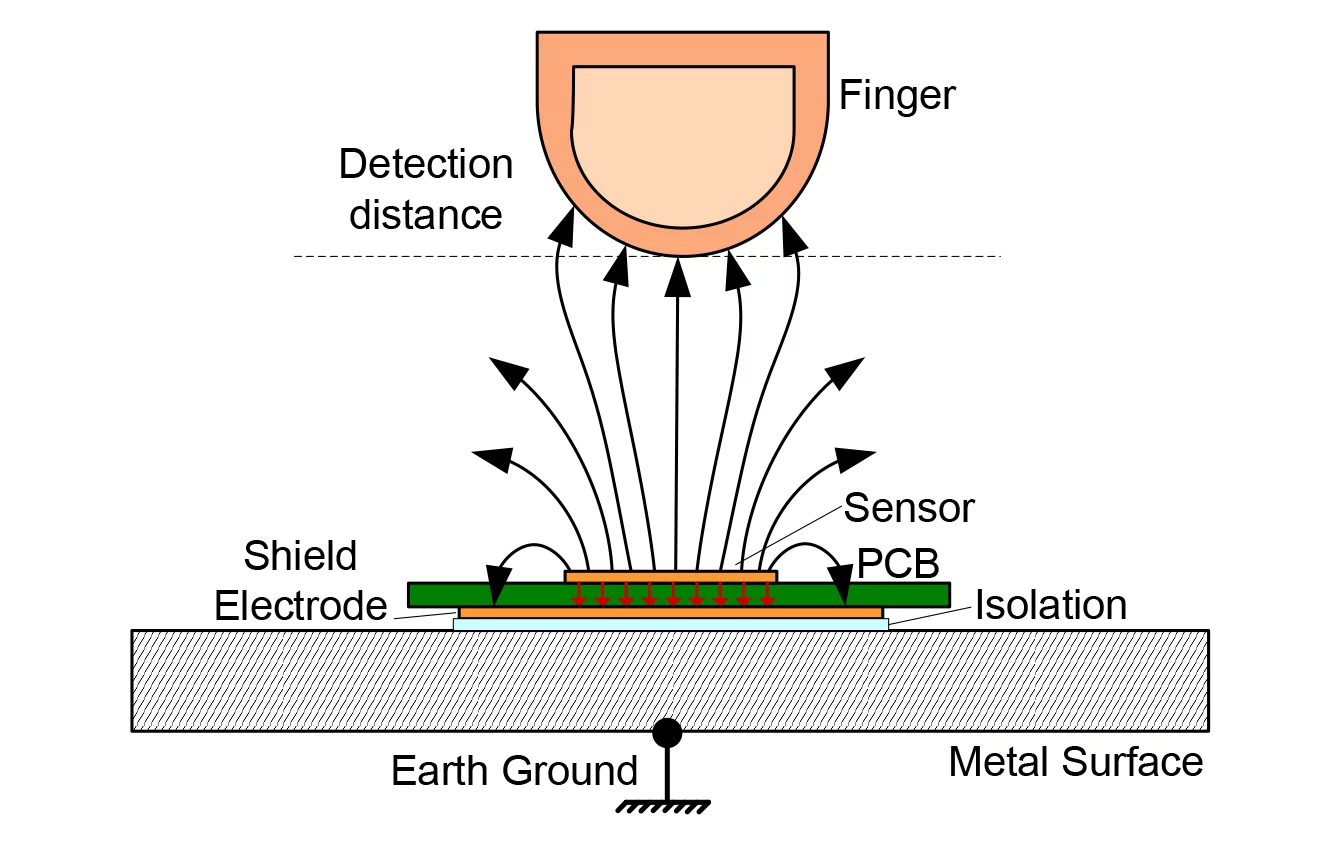
So when our finger touches on screen it actually disturbs an invisible electric field and because of that device instantly calculates where this disturbance happened and so find touches onscreen.
That’s it all.
Everything else below is engineering detail of it.
There are Two Main Types of Touchscreens
All of the touchscreens don’t work in same way. There are two major technologies and we probably have used both of them.
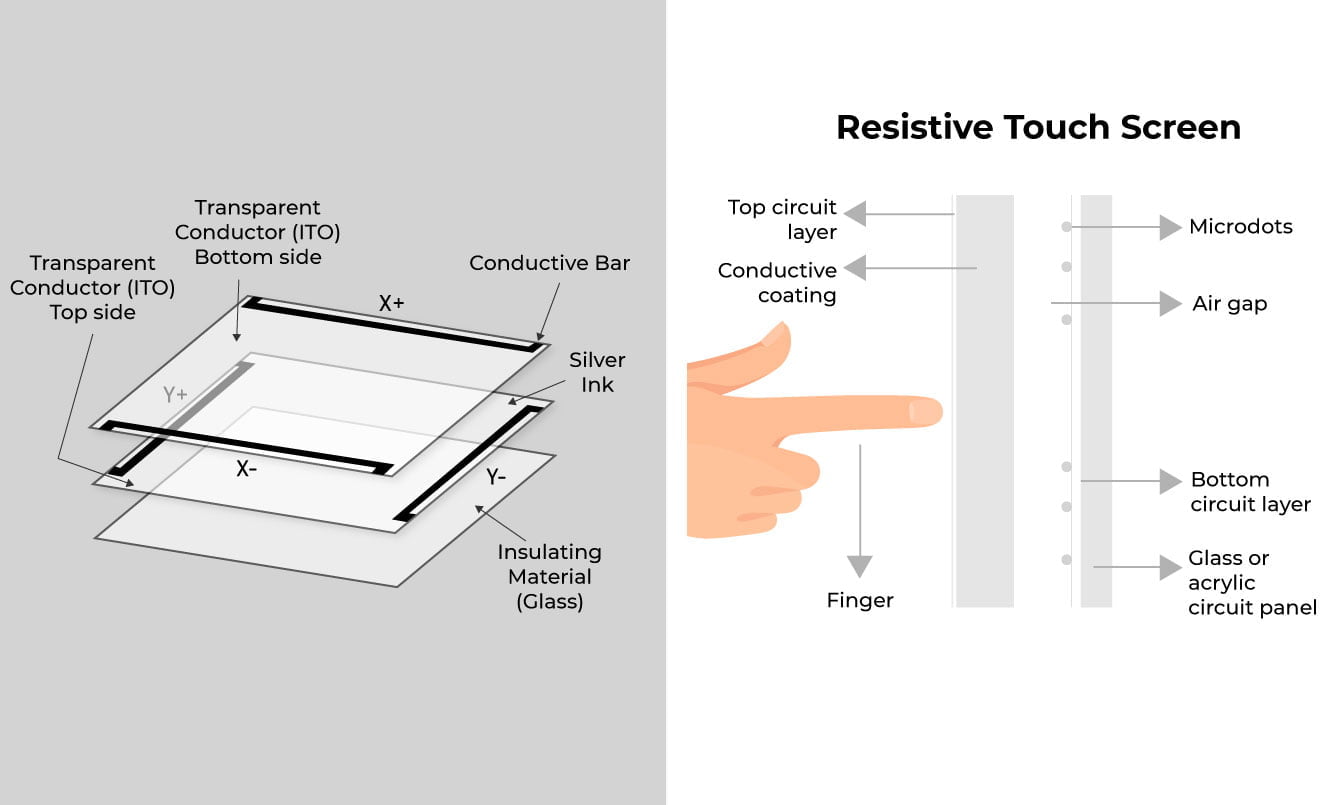
1️⃣ Resistive Touchscreens (Old but Reliable)

These type of screens are common in:
- Old smartphones
- ATMs
- Car infotainment systems
- Industrial machines
How they work:
- These screens has two thin layers which have a small gap in them
- When we press screen theses layers touches each other
- This contact point changes into electrical resistance
- Then device calculates this position
Key features:
- These touchscreens Work well with finger, stylus, glove, or pen
- Needs pressure
- Less precise
- No multi-touch
👉 So you must have somewhere old screens are feel like pushing not just like touching.
2️⃣ Capacitive Touchscreens (Modern Smartphones)
This is the technology which most modern phone uses now a day.
How it works:
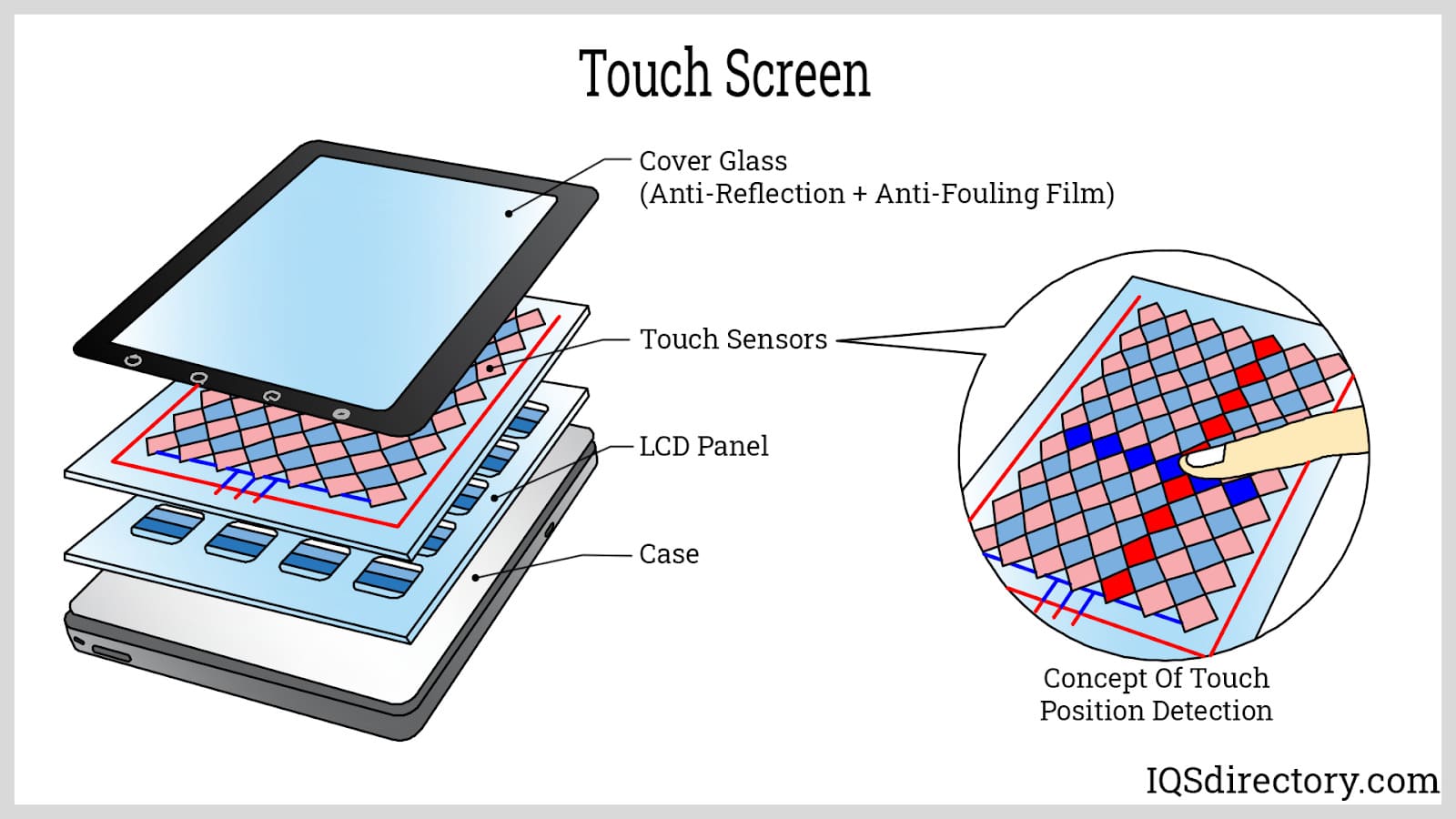
- Glass is coated with a transparent conductive layer
- An electrical field exist across whole screen
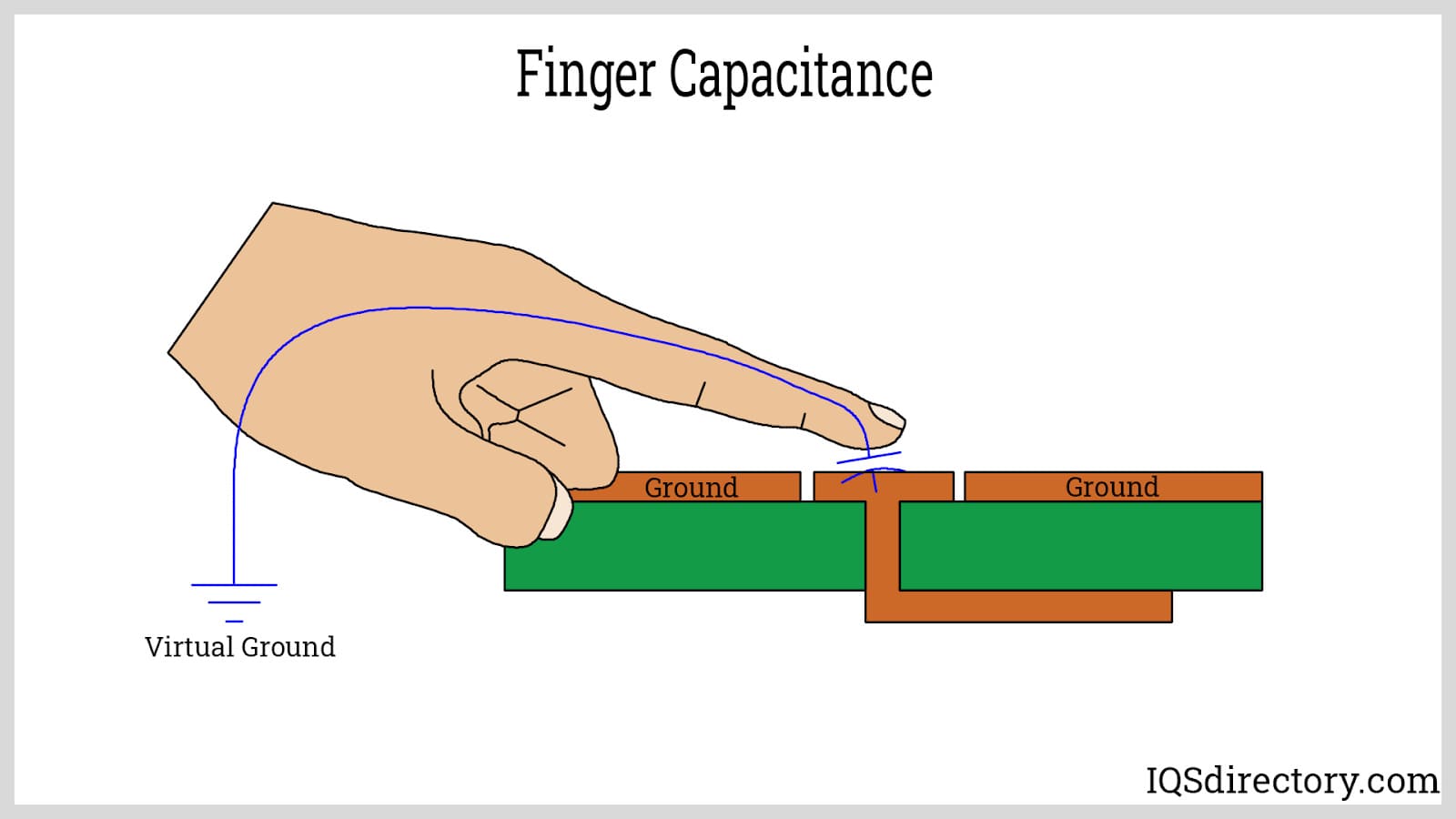
- Our finger (which conducts electricity) touches this glass
- It draw a tiny amount of charge
- Sensors detect this exact location of happening disturbance
Key features:
- Extremely accurate
- Supports multi-touch (pinch, zoom, rotate)
- No pressure needed
- Doesn’t work with normal gloves
👉 In it we are not just pressing on screen – we are interacting with electricity.
Why Only Fingers (or Special Gloves) Work
Some how you must have tried your phone with gloves in winter but then
Nothing happens.
This is because:
- Capacitive screens need something which is conductive
- Our finger works because it contain water and ions
- Regular gloves are insulators of electricity
Touchscreen gloves solve this by:
- Adding conductive fibers on fingertips of gloves
- Which allow charge to transfer
So ye our phone literally recognizes your body’s electrical properties.
How Our Phone Know EXACTLY Where We Have Touched On Screen
This is a wild part.
All touchscreens have a grid of sensors which are running horizontally and vertically.
When our finger touches on screen:
- It alters electric field at a particular point
- Then Sensors measure this change in capacitance
- And processor triangulates this exact coordinates
- Software maps that location to an action
Everything is happening in a milliseconds.
When our brain register touch at that time our phone already reacted.
What Happens During Multi-Touch?
Pinch-to-zoom feels you very simple but it is most computationally impressive.
Your screen:
- Tracks all multiple electric disturbances at once
- Then separates them into individual touch points
- And updates their movement in real time
- Predicts motion for smoother animations
This is the reason why modern phones feel like fluid instead of laggy.
Why Cracked Screens Still Work (Sometimes)
You must have noticed this?
Your screen is cracked
But touch is still working.
That’s because:
- Glass layer can crack
- But conductive layer underneath may still be intact
Touch only fails when:
- Conductive grid breaks
- Or sensors lose continuity
This is also explains why:
- Screen protectors don’t affect touch
- Thick cases rarely interfere
Are Touchscreens Getting Smarter?
Absolutely.
New developments have included:
- Haptic feedback (fake physical clicks)
- Pressure sensitivity
- Palm rejection
- Hover detection
- Under-display fingerprint sensors
Future screens can also:
- Detect materials
- Sense temperature
- Read biometric signals
Everything just from glass.
A Simple Experiment Which You Can Try
You must try this right now:
- Open a drawing app
- Use your finger — it will work
- Use a plastic pen — nothing happened
- Wrap foil around tip of pen — wow it worked
You just have recreated touchscreen physics at your home.
The Takeaway
Touchscreens work because:
- Our body conducts electricity
- Glass are carrying invisible electric fields
- Sensors are so fast to detect microscopic changes
Every tap is in a tiny electrical conversation between us and our device.
Not buttons.
Not pressure.
just Physics.