Why Do Dreams Feel So Real?
You suddenly wake up. Your heart is pounding so fast, you can hear it. For a few seconds, your mind convinces you that a shadow—or something darker—is right behind you.
Then you realize… it was just a dream.
We’ve all had dreams that feel very real. But if dreams are just stories made by the mind, why do they feel so real?
To understand this, we need to look at how people saw dreams in the past, how our brain creates them today, and how dreams actually help our mind and body.
How Ancient Civilizations Understood Dreams
Long before we had fMRI machines to track brain waves, ancient civilizations recognized the profound power of dreams. Because dreams felt real, people never saw them as imagination.
- The Portal to the Divine: Ancient Egyptians believed dreams were a literal gateway—a channel where the gods delivered messages, warnings, and prophecies. They even had “dreamers” who acted as interpreters.
- The Healing Temples: In Ancient Greece, sick people would travel to Asclepieions (healing temples dedicated to the god of medicine). They believed that if they slept in the temple, the god would visit them in a dream and reveal the cure to their illness.
- The Spiritual Plane: Many Indigenous cultures around the world view the dream state not as a simulation, but as an actual, parallel reality where the soul travels, connects with ancestors, and gains spiritual wisdom.
For thousands of years, dreams were the ultimate mystical frontier. Today, science offers a different, but equally mind-bending, explanation.
Why Dreams Feel Real During REM Sleep
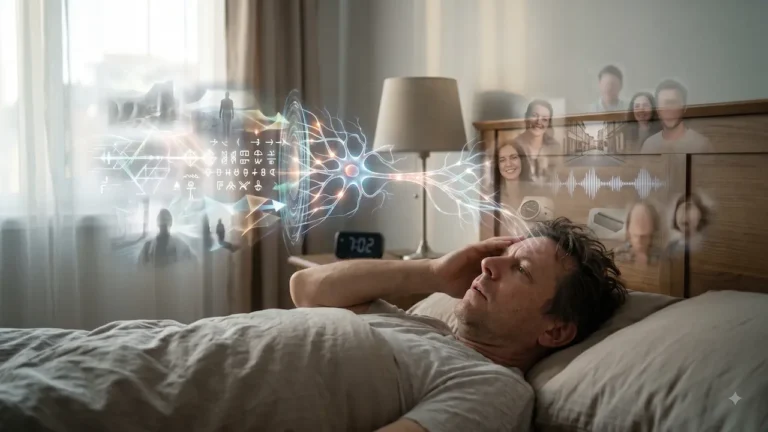
During REM (Rapid Eye Movement) sleep, your brain powers down its primary sensory inputs (your actual eyes and ears). To prevent the system from just displaying a blank screen, it starts building its own environment.
Instead of a simple 2D side-scroller where the path and physics are strictly defined, your mind unleashes an unrestricted, fully immersive simulation. But why don’t you instantly realize it’s a simulation when gravity stops working?
- The Logic Center Goes Offline: The prefrontal cortex is your brain’s logic center. It is the QA (Quality Assurance) tester that points out errors in reality. During REM sleep, this area shuts down. Your internal “BS detector” is unplugged, meaning you accept massive glitches in reality as completely normal.
- The Emotion Engine Overdrives: While your logic is asleep, your amygdala—the brain’s emotional processor—is highly active. The threat chasing you might be a poorly rendered illusion, but the physical adrenaline and fear you feel are 100% real.
How Dreams Help Emotional Healing and Memory
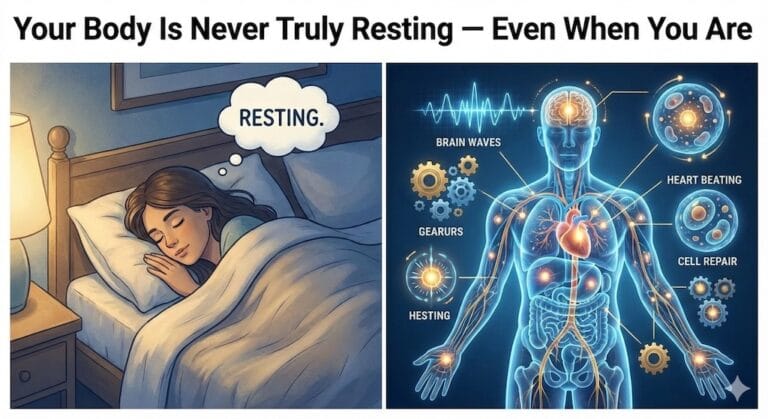
Dreams aren’t just an entertaining (or terrifying) nightly movie. They are a critical biological function—essentially a background software update that patches your mental and physical health.
- Emotional First Aid (Overnight Therapy): Matthew Walker, a prominent sleep scientist, calls dreaming “overnight therapy.” During REM sleep, your brain processes difficult, high-stress emotional memories in a neurochemical ( a calm brain state ) environment completely free of noradrenaline (a stress chemical). Your brain is essentially stripping the painful, sharp edges off your trauma so you can cope with it better the next day.
- Memory Defragmentation: Dreams help your brain sort through the massive amount of data you collected during the day. It decides what to keep (transferring it to long-term memory) and what to delete, freeing up space for you to learn new things when you wake up.
What Is Sleep Paralysis and Why It Happens
If your brain fully believes it is running from a threat, what stops your physical body from sprinting out of bed?
When you enter REM sleep, your brain sends signals to paralyze your major muscle groups. This state, known as REM atonia, unplugs your physical controller so you stay safely in bed.
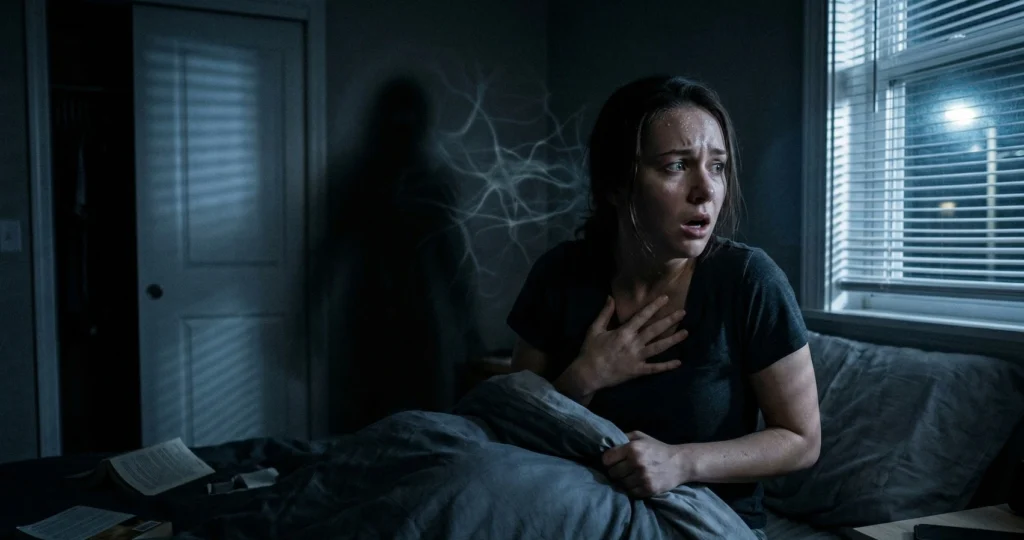
But sometimes, the timing gets thrown off. If your conscious mind wakes up before the paralysis command is lifted, you experience sleep paralysis. Your eyes open, your logic center boots up, and you realize you are in your bed—but your body is completely frozen. Because you are stuck in the buffer zone between REM sleep and waking reality, your brain often continues to project dream elements directly into your actual bedroom. It is a terrifying, but harmless, glitch in the system.
Quick Dream Facts You Should Know
- You forget 90% of them: Within 10 minutes of waking up, the vast majority of your dream data is permanently deleted from your brain’s cache.
- Time Dilation is real: Because your brain isn’t relying on external cues, a dream that feels like it took hours to play out might have only lasted a few minutes in real time.
- Mostly familiar faces: Because Your brain rarely creates completly new faces. The People you see in dreams- even strangers- are usually built from faces you’have seen before, even briefly in real life.
Conclusion
Dreams are far more than random static. They are an ancient mystery, an ultra-realistic biological VR simulation, and a vital nightly health patch all rolled into one. Your brain works overtime in the dark to heal your mind, sort your memories, and safely guide you through the ultimate nightly illusion.
The Nightly Render: Why Dreams Feel Breathtakingly Real (And How They Actually Heal Us)
Every night, while you sleep, your brain become a storyteller, a healer, and a simulator- quietly working in the dark to prepare you for the next day.