For most of people sleep is feel like luxury.
Something which you borrow from.
Something which you sacrifice.
Something which you promise to fix “tomorrow”.
But modern neuroscience has uncovered a very uncomfortable truth that: even a single night of poor sleep can disrupt a lot how your brain works. This is not a exaggeration or motivation talk. This is visible in brain scans, reaction tests, and cellular-level research.
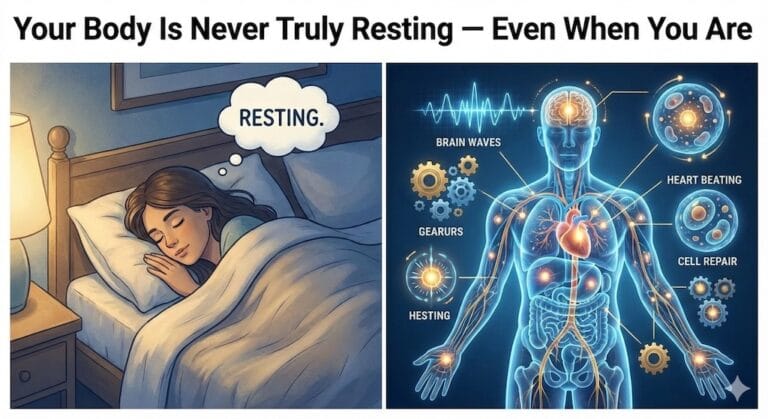
Sleep is not just rest.
Sleep is maintenance for your body.
🧠 What Actually Happens to Brain When We Don’t Sleep
When we stay awake too long our brain do not just feel tired but It also begins to malfunction in stages.
Many Researches shows that sleep deprivation can causes:
- Slower communication between neurons
- It reduces activity in prefrontal cortex (decision-making area of our brain)
- Poor emotional regulation
- Memory formation failure
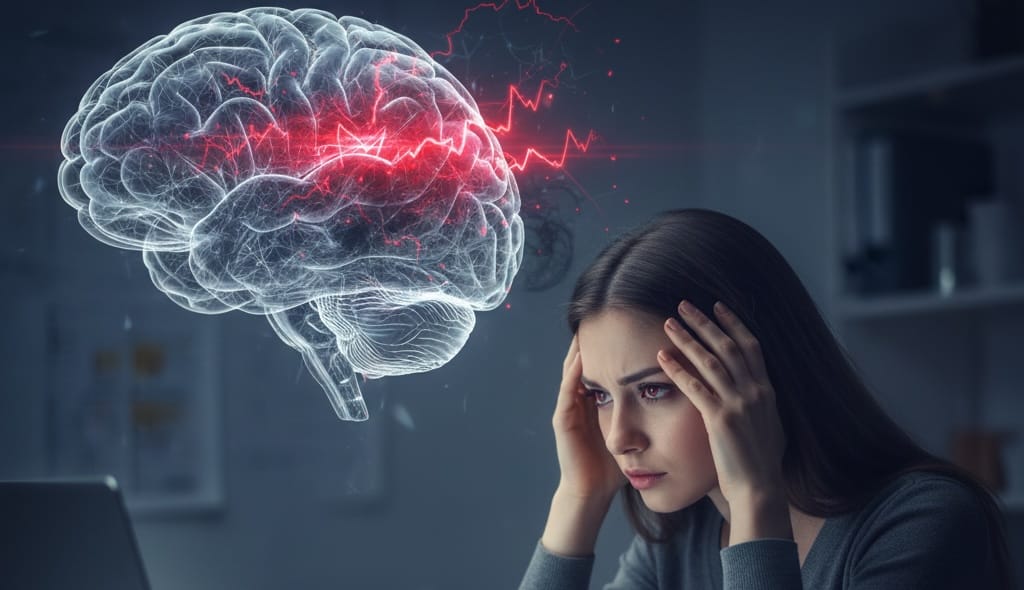
Brain scans also have revealed something even more stranger like some parts of our brain begin to “switch off” locally and still we are awake. Scientists call this process local sleep.
So when we don’t sleep our brain brain literally starts sleeping in pieces.
⚡ Reaction Time Drops Before You Feel Sleepy
One of the most dangerous effects of sleep loss is that you don’t realize how much impaired you are.
Studies show that after 18–24 hours of not having sleep:
- Reaction time becomes similar to like alcohol intoxication
- Attention lapses will increase so much dramatically
- Our brain start missing obvious information
This is the reason why sleep deprivation is most linked to:
- Road accidents
- Workplace errors
- Medical mistakes
Brain feels “fine” for us but is operating at reduced capacity.
🧬 Sleep Clears Toxic Waste From Brain
Scientists discovered something extraordinary in 2013.
Our brain activates a cleaning system called glymphatic system while we are sleeping. This system flushes out toxic waste proteins which are build during day.
So when you don’t sleep:
- Waste proteins accumulate
- Neural efficiency start dropping
- Long-term brain health is affected
Some of these proteins are also linked to neurodegenerative diseases like Alzheimer’s.
Sleep is not just passive but also It is biological cleanup.
😴 Memory and Learning Break Without Sleep
Sleep is when our brain stabilize and organize our memories which are formed during whole day it filter everything like what to save or what to delete or what to keep in tansh in a simple word.
Without sleep:
- New information fades quickly
- Skills fail to consolidate
- Learning becomes inefficient
This is why night studies often backfire you stay awake longer but our brain have stored less of whatever you have studied because of sleep.
Sleep is not stealing time from learning.
It is helping you to completes it.
🧪 One Night Is Enough to Show Damage
Here is most shocking part.
Research have shown that if just one night of total sleep deprivation can:
- Reduce glucose metabolism in our brain
- Disrupt our emotional control circuits
- Will lower attention and working memory
Our brain recovers with proper sleep but repeated sleep deprivation compounds damages to our brain over time.
Short-term harm can reversible like you don’t sleep once or twice in a month.
But long-term like ignoring proper sleep 2 to 3 times in a week can not be guaranteed to repaired.
🕰️ Why Modern Life Makes This Worse
Artificial light, screens, stress, and irregular schedules are interfering so much with natural sleep cycles.
Our brain is evolved expecting:
- Darkness at night
- Regular sleep timing
- Long uninterrupted rest
Modern habits have breaked these assumptions daily and quietly pushing our brain into chronic sleep debt.
We cannot outwork more then our biology.
🧠 Real Takeaway
Sleep is not weakness.
Sleep is not waste of time.
Sleep is one of most underestimated brain upgrade which is available for all humans.
Missing it often enough and our brain does not protest loudly.
But it just simply start working worse.
Very silently.
🔬 Scientific References & Research
- National Institute of Neurological Disorders and Stroke – Sleep and brain health:
https://www.ninds.nih.gov/health-information/public-education/brain-basics/brain-and-sleep - Harvard Medical School – Why sleep is critical for brain function:
https://health.harvard.edu/staying-healthy/why-you-need-sleep - National Institutes of Health – Glymphatic system discovery:
https://www.nih.gov/news-events/nih-research-matters/how-sleep-clears-brain - PubMed – Effects of sleep deprivation on cognitive performance:
https://pubmed.ncbi.nlm.nih.gov/?term=sleep+deprivation+brain