What is Sleep Paralysis?
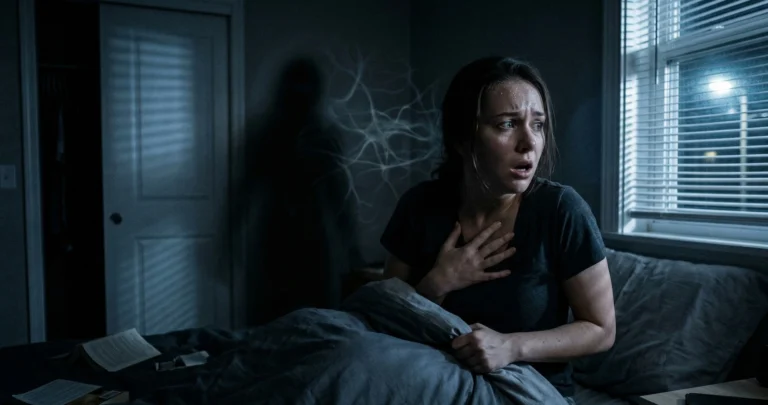
You open your eyes from sleep, seeing a familiar background. Everything feels normal—until you try to move. It’s as if your body is completely frozen; your hands and legs refuse to respond no matter how hard you try. A sudden fear begins to rise within you, growing stronger with each second—especially because it’s your first time experiencing something like this. Your mind is awake, aware of everything around you, yet your body feels trapped, creating a deep sense of panic and helplessness that you can’t easily escape.
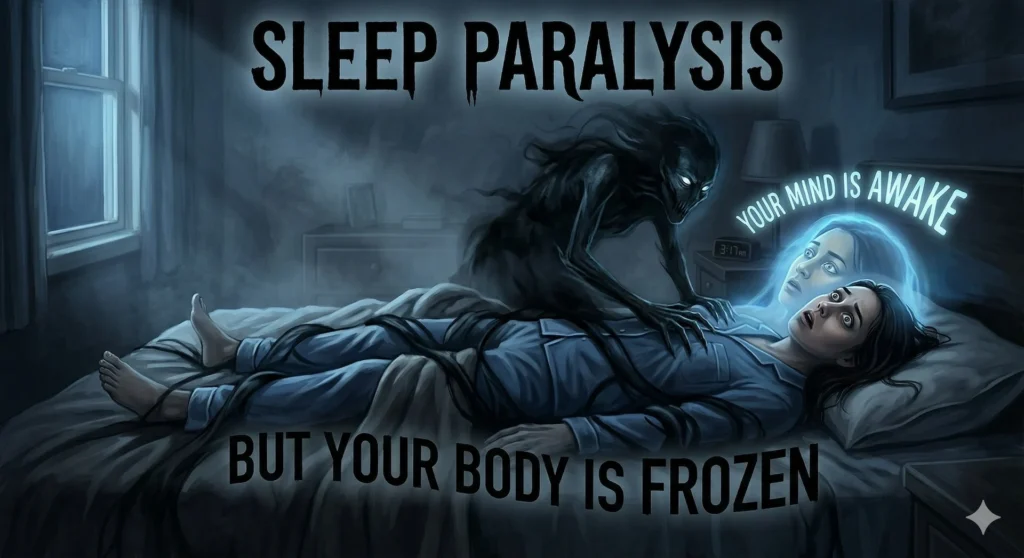
Welcome—this is called sleep paralysis, a state where the body is at rest, but the mind is awake.
🧠 The Science Behind Sleep Paralysis
When you sleep, your body enters a stage called Rapid Eye Movement sleep (REM sleep). During this phase, your brain is highly active and creates vivid dreams. At the same time, your body intentionally shuts down most muscle movement—a process known as Muscle atonia (muscle atonia)—to prevent you from physically acting out your dreams.
However, in sleep paralysis, something unusual happens. Your brain wakes up suddenly, but your body is still in this REM-induced paralysis state. Because of this mismatch:
- Your conscious mind becomes aware
- But your body remains immobile
This creates the frightening feeling of being “trapped” in your own body.
In Simple terms
In simple terms, sleep paralysis is a glitch in the brain’s sleep mechanism. Your mind exits the dream state, but your body hasn’t caught up yet. This is why:
• You cannot move or speak
• You may feel pressure on your chest
• You might even experience vivid dream-like hallucinations
So, it’s not that your body is “trapped” by something external—rather, it is a natural biological process where your brain and body temporarily fall out of sync during REM sleep.
🩺 Expert Insights: The Clinical Perspective
Sleep paralysis is a recurrent isolated parasomnia marked by an inability to perform voluntary movements at sleep onset or upon awakening, due to the persistence of REM-related muscle atonia into wakefulness.
–Carlos H. Schenck ( sleep disorder specialist )
Sleep paralysis episodes involve a dissociated state of consciousness in which elements of REM sleep, including vivid imagery and motor inhibition, co-occur with waking awareness.
The sensed presence during sleep paralysis may arise from disturbed integration of body schema and self-representation in the temporoparietal junction, combined with amygdala-driven threat perception.
🛠 Proven Techniques to Break the Paralysis
When you’re stuck in Sleep Paralysis, the biggest mistake is trying to fight it with full force. That panic actually makes it feel longer.
Instead, use these smart control techniques:
Tiny Movements Technique
Don’t try to move your whole body.
Start with:
- Wiggling your toes
- Moving your fingers
- Slight tongue movement
Your body is “locked,” but small signals can break the system. Once one part moves → the rest follows.
Control Your Breathing (Most Powerful)
Your breathing feels heavy because of REM Sleep, not because you’re suffocating.
Do this:
- Take slow, deliberate breaths
- Focus only on inhale–exhale rhythm
This tells your brain: “I’m safe” → panic reduces → paralysis breaks faster.
Don’t Engage with the “Presence”
That shadow, sound, or figure?
It’s your brain mixing dream + reality.
If you react with fear:
- It becomes more vivid
- Feels more real
Instead:
- Ignore it
- Or mentally say: “This is not real”
You’ll notice it starts fading.
Force a “Jolt” (Advanced Trick)
Try:
- Imagining your body rolling off the bed
- Or suddenly jerking yourself up
Even if your body doesn’t move physically, the intent can break the paralysis.
Close Your Eyes (If Open)
Visual hallucinations become weaker when:
- You shut your eyes
- Or shift focus inward
This reduces fear instantly.
🌙 From Fear to Power: The Lucid Dreaming Gateway
Sleep paralysis is not just scary—it can be a powerful tool for lucid dreaming. During an episode, your body is asleep but your mind is awake, creating a rare hybrid state of consciousness.
If you stay calm, you can transition into a lucid dream, where you control the environment, characters, and story—essentially living out anything you imagine.
Why it works:
- Your brain is awake while REM dreaming continues.
- Vivid imagery from dreams can be consciously directed.
- Strong imagination allows creation of scenes, scenarios, or adventures.
Uses:
- Creative scenario building for writers and artists
- Skill practice or problem-solving
- Emotional exploration in a safe environment
In short: sleep paralysis can turn fear into a gateway to controlled, conscious dreaming, where your imagination becomes reality.
🚩 When to See a Doctor
While occasional sleep paralysis is harmless, it can sometimes be a symptom of:
- Narcolepsy: Excessive daytime sleepiness.
- Sleep Apnea: Interrupted breathing during the night.
- Anxiety Disorders: High stress often triggers frequent episodes.
If your episodes are preventing you from getting a full night’s rest, consult a sleep specialist to rule out underlying conditions.